
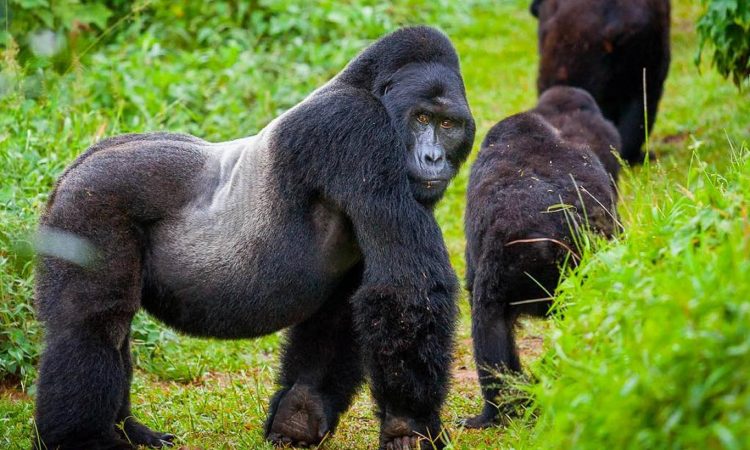
silverback gorillas
Silverback gorillas are a subspecies of the eastern gorilla known for their distinctive silver-gray hair on their backs and hips, which is more pronounced in adult males. Here are some key points about silverback gorillas:
- Physical Characteristics: Adult male silverback gorillas are easily recognizable due to their large size and the silver-gray hair that develops on their back as they mature. They have a muscular build and can weigh anywhere from 300 to 500 pounds (136 to 227 kilograms). Females and younger males have darker hair and lack the silver stripe.
- Social Structure: Silverback gorillas are the leaders of their social groups, known as troops. A troop typically consists of several adult females, their offspring, and a dominant silverback male. The silverback’s role is to protect the group from external threats and mediate conflicts within the troop.
- Behavior: Silverback gorillas are herbivores, primarily feeding on plants, leaves, stems, fruits, and shoots. They are diurnal animals, meaning they are active during the day. Gorillas are generally peaceful and non-aggressive, but silverbacks can display aggressive behaviors to defend their troop or establish dominance.
- Communication: Gorillas communicate through a variety of vocalizations, body postures, and facial expressions. Vocalizations include grunts, roars, hoots, and barks. Nonverbal communication, such as chest-beating and various body movements, also plays a crucial role in their interactions.
- Habitat: Silverback gorillas are found in the forests of central and eastern Africa. They inhabit a range of habitats, including tropical rainforests, montane forests, and bamboo forests. Their natural range extends through countries like Uganda, Rwanda, the Democratic Republic of Congo, and surrounding areas.
- Conservation Status: Silverback gorillas, like all gorilla species, are listed as endangered by the International Union for Conservation of Nature (IUCN). Their populations have been significantly impacted by habitat loss due to deforestation, as well as poaching and disease. Conservation efforts focus on protecting their habitats, preventing illegal hunting, and promoting sustainable ecotourism.
- Ecotourism: Gorilla trekking has become an important form of ecotourism in some African countries. Tourists can visit gorilla habitats and observe these magnificent creatures in the wild, with a portion of the revenue generated going toward conservation efforts.
- Research: Studying silverback gorillas and their behavior helps researchers understand the broader ecology and social dynamics of gorilla populations. Research also contributes to the development of conservation strategies and policies to protect these animals and their habitats.
In conclusion, silverback gorillas are iconic and charismatic creatures that play a crucial role in their ecosystems. Efforts to protect and conserve their populations are essential to maintaining biodiversity and the health of the environments they inhabit.