
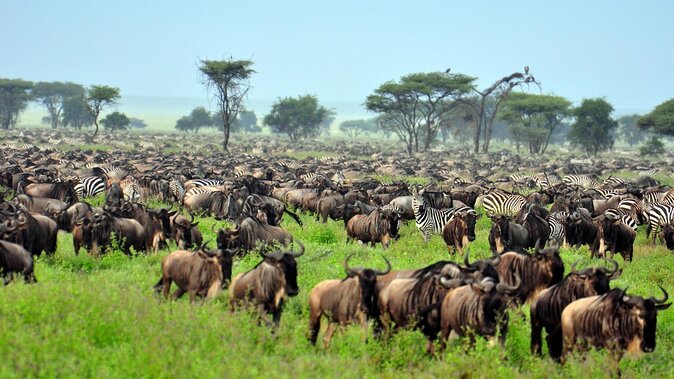
wildbeest migration
The wildebeest migration, often referred to as the Great Migration, is one of the most remarkable wildlife spectacles on Earth. It involves the movement of millions of wildebeest, along with other animals like zebras and gazelles, in a cyclical pattern between the Serengeti National Park in Tanzania and the Maasai Mara National Reserve in Kenya. This migration is driven by seasonal changes in search of food, water, and suitable breeding grounds.
The migration is a continuous cycle that follows a general pattern:
- Calving Season (January to March): The migration usually begins in the southern Serengeti during the calving season. This is a time when wildebeest give birth to their young, taking advantage of the fresh grass that emerges after the short rains. This attracts predators like lions, hyenas, and cheetahs.
- Grassland Feeding (April to June): As the rains continue, the wildebeest move westward and northward, following the growth of fresh grass. During this period, the herds can be found grazing in the central and western Serengeti.
- River Crossing (July to October): One of the most iconic and dramatic parts of the migration is the river crossing. As the dry season progresses, the herds head towards the Grumeti River and later the Mara River, both of which pose significant challenges due to the presence of crocodiles and strong currents. These river crossings are dangerous but essential for reaching the lush pastures of the Maasai Mara on the other side.
- Return Journey (November to December): After spending several months in the Maasai Mara, the wildebeest and other migratory animals begin their journey back to the Serengeti in anticipation of the upcoming calving season. This phase completes the cycle.
The Great Migration is a remarkable example of the interconnectedness of different species and their environment. It also serves as a major tourist attraction, drawing visitors from all over the world who come to witness this awe-inspiring natural phenomenon. It’s important to note that the exact timing and route of the migration can vary from year to year depending on factors like rainfall patterns and food availability.
Conservation efforts are crucial to protecting the habitats and ecosystems that support the wildebeest migration. National parks, reserves, and collaborative initiatives between Kenya and Tanzania help ensure the survival of this incredible natural spectacle for generations to come.